The Second Circuit’s refusal to pause state enforcement leaves Kalshi and Coinbase facing New York and Connecticut gambling cases while their appeals continue. The ruling also raises the stakes in a growing dispute over whether sports event contracts fall under federal commodities oversight or state gambling laws. For now, the companies must pursue their appeals while the states’ cases remain active, a procedural result that gives neither side a final answer on the underlying question of authority.
A three-judge panel denied the companies’ requests for injunctions pending appeal, without specifying which requirement they failed to satisfy. That leaves the reasoning narrow: the panel declined to grant temporary protection, but its order doesn’t explain how it views the ultimate merits. The decision followed arguments from Kalshi, Coinbase, the Commodity Futures Trading Commission (CFTC), New York and Connecticut. The panel considered Kalshi’s two appeals alongside Coinbase’s challenge to an August ruling by Judge Oliver, which let Connecticut pursue its claim against Coinbase’s sports contracts.
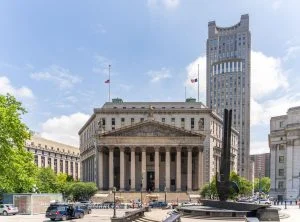
New York and Connecticut can keep pressing their claims
The order clears the way for both states to continue their state-court cases seeking to stop the companies’ sports event contracts. Kalshi had already been denied preliminary injunctions in federal court in New York in July and Connecticut in August. Those earlier denials and the latest appellate decision leave the companies without the temporary court orders they sought to halt state enforcement while litigation proceeds. Gaming attorney Daniel Wallach described the appellate ruling as a significant win for the states, saying a remand order would put them in position to seek preliminary injunctions in state court.
That procedural distinction matters. A state can keep pressing its case even as a company argues that federal law puts its products outside state gambling rules; the dispute then continues through separate court proceedings, with no immediate suspension of enforcement. The panel’s order doesn’t settle whether the contracts are federally regulated swaps or state-regulated wagers. For businesses operating in the affected markets, the practical uncertainty remains: the legal classification is contested, and the states can continue to pursue remedies in court.
New York sued KalshiEX on July 31, 2026, alleging that its prediction market operated as an illegal gambling business. Attorney General Letitia James had also sued Coinbase and Gemini in April 2026 over similar claims. The New York case against Kalshi seeks billions of dollars in damages, according to InGame. That amount signals the scale of the state’s claim, though the supplied account doesn’t establish what damages, if any, a court would ultimately award. The CFTC has told Kalshi to disregard the state-court order if it takes effect, putting the federal agency’s position in direct tension with the state’s enforcement effort.
Connecticut’s enforcement campaign began earlier. In December 2025, the state Department of Consumer Protection’s Gaming Division ordered Kalshi and two other platforms to stop offering online sports wagering without a license. On August 26, 2026, Attorney General William Tong, Consumer Protection Commissioner Bryan T. Cafferelli and Gov. Ned Lamont announced a lawsuit seeking to halt Kalshi’s unlicensed sports wagers. The sequence shows that Connecticut’s position developed through administrative action and then litigation, with the state continuing to treat the sports contracts as activity covered by its gambling rules.
A split over federal authority is widening
The Second Circuit ruling adds to a series of 2026 decisions favoring state enforcement against prediction markets. It conflicts with the Third Circuit’s ruling that New Jersey cannot regulate sports bets on prediction platforms, accepting Kalshi’s position that its contracts are “swaps” subject to the CFTC’s exclusive authority. The disagreement isn’t merely about how a single product should be labeled. It concerns which level of government gets to set the rules when a platform describes a sports position as a financial contract and a state views it as a wager.
Wallach said nine federal judicial rulings within the Second Circuit had gone against Kalshi, Coinbase and/or the CFTC in attempts to block state gambling enforcement through emergency or preliminary relief. The count underscores how often the companies have failed to obtain temporary court protection in that circuit. It doesn’t, by itself, settle the legal question or predict how the appeals will end; rulings on interim relief can leave the core dispute unresolved. Still, the record makes it harder for the companies to prevent states from advancing their cases while they wait for a definitive ruling.
The CFTC has separately challenged state actions. On April 2, 2026, it sued Arizona, Connecticut and Illinois over measures targeting CFTC-registered designated contract markets. It sued New York in the Southern District of New York on April 24, asking the court to find that federal law gives the agency exclusive authority over event contracts and to bar the state from enforcing laws it considers preempted. These federal suits put the agency’s claim of authority directly before courts, while the state cases test how far gambling laws can reach in practice. The proceedings may develop on different tracks, leaving platforms to navigate competing claims in the meantime.
What the dispute means for markets and users
The dispute reaches beyond these companies: its outcome could shape state sportsbook markets and the boundaries of CFTC authority. If courts accept that sports event contracts fall within federal commodities oversight, states could face limits on applying gambling rules to those products. If states prevail, platforms may have to contend with state licensing and enforcement demands. Those are competing possibilities raised by the litigation, not outcomes the Second Circuit has decided.
This is more significant than it looks. A decision about the legal category of a contract can determine which regulator sets the operating conditions, and that can affect where a product is available and how it’s offered. If you’re working in this space, the immediate signal is procedural: state enforcement remains live even as federal claims advance. And this is the part most people overlook: temporary relief can shape the market before any court settles the legal theory behind it. For users, uncertainty over access and oversight may persist while the cases proceed. In practice, uneven outcomes across circuits can leave companies facing different constraints in different states.
New Jersey has asked the Supreme Court to review the Third Circuit’s April 6, 2026, decision in case 25-1922, and Kalshi is preparing its response. That petition now offers a path for the justices to address the growing divide over sports event contracts. Whether the court takes up the case remains unresolved in the supplied account. Until then, states and the CFTC will continue making their competing claims in court, and the companies will have to operate amid that uncertainty. No clean answer yet.